How to Use AI Podcasts as a Content Marketing Engine
Turn AI-powered podcasting into a content marketing flywheel. Learn how to automate production, repurpose episodes into blogs and social posts, and build brand authority at scale.
Most businesses treat content marketing like a treadmill. You publish a blog post, share it on social media, watch it get a few clicks, then start the whole cycle again next week. It's exhausting, and the ROI feels increasingly thin as every channel gets more crowded.
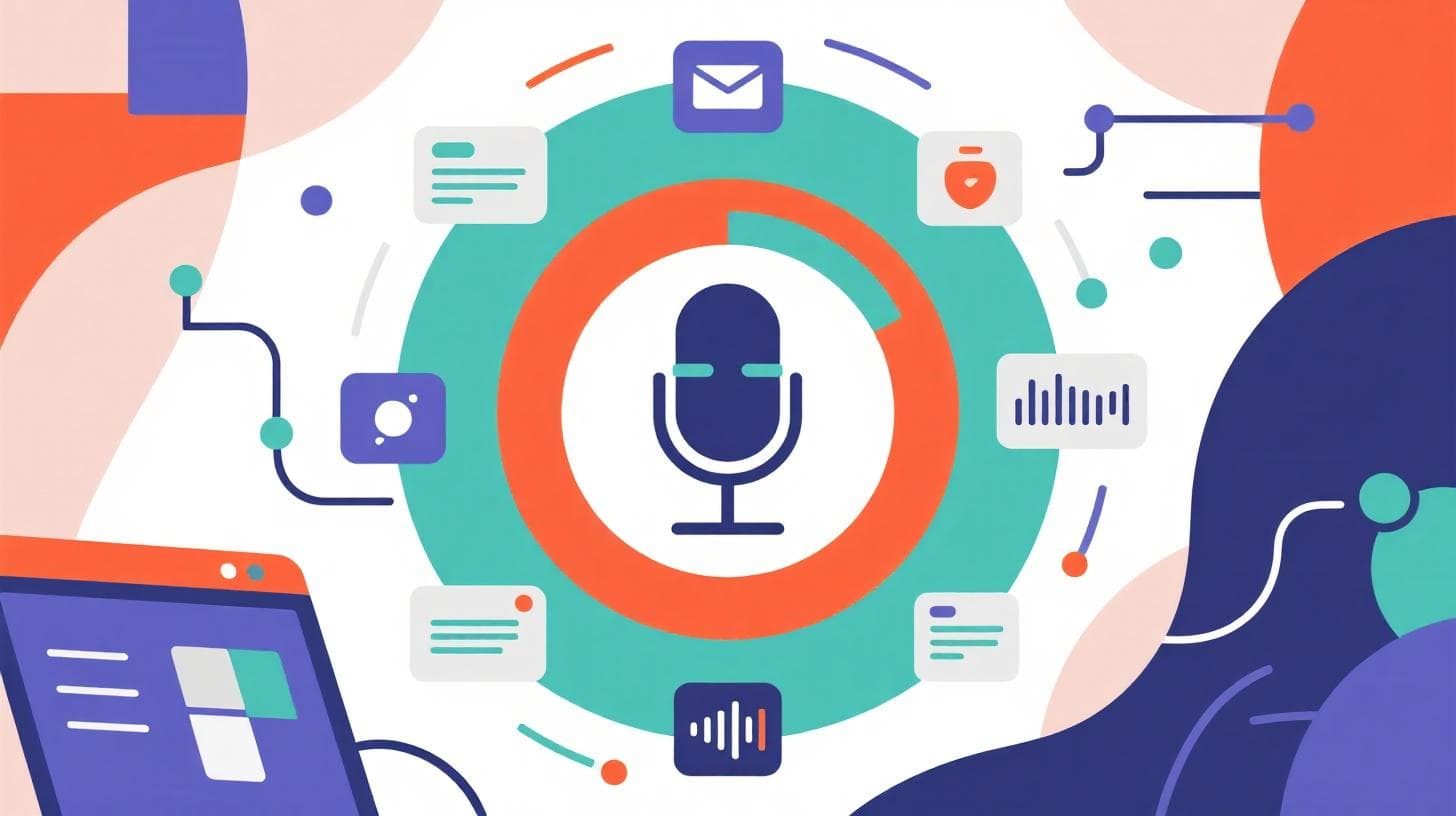
But what if you could flip the model? Instead of grinding out individual pieces of content, you build a single engine that produces a podcast, blog material, social clips, newsletter topics, and thought leadership assets, all from one automated workflow.
That's exactly what AI-powered podcasting makes possible. With platforms like VibeCasting, you can go from a topic idea to a fully produced, multi-voice podcast episode without recording a single word yourself. The AI handles deep research, scriptwriting, audio generation, and even distribution. But the real power isn't just the podcast itself. It's what the podcast enables across your entire content strategy.
This guide breaks down how to turn AI podcasts into a content marketing flywheel that compounds over time, builds brand authority, and drives measurable business results.
Why Podcasts Are the Missing Piece in Most Content Strategies
Content marketing works best when it builds trust. And trust comes from repeated, meaningful exposure to your brand's perspective on topics your audience cares about. The problem? Most content formats are either high-effort or low-retention. Blog posts take hours to write and readers skim them in seconds. Social posts disappear from feeds within minutes. Video production requires equipment, editing skills, and on-camera comfort that many teams simply don't have.
Podcasts occupy a unique position in the content landscape. They're intimate. Listeners spend 20, 30, even 60 minutes with a single episode, often during commutes, workouts, or household tasks. That kind of sustained attention is nearly impossible to achieve with any other medium. According to Edison Research's Infinite Dial study, podcast listeners consume an average of eight episodes per week, and over 80% listen to all or most of each episode. That's not skimming. That's deep engagement.
For businesses, this creates a powerful dynamic. A podcast gives you a recurring touchpoint with your audience that feels personal, not promotional. When a prospect has spent several hours listening to your brand's take on industry challenges, they show up to a sales conversation already warmed up. They already understand your philosophy, your expertise, and your point of view.
The traditional barrier, of course, has been production. Booking guests, recording sessions, editing audio, writing show notes, and maintaining a consistent schedule requires either a dedicated team or significant founder time. Most businesses that attempt a podcast either burn out after a dozen episodes or never launch in the first place.
AI changes this equation entirely. Tools now handle every stage of podcast production, from researching a topic in depth to generating natural-sounding multi-voice audio. The time investment drops from 10 to 15 hours per episode to minutes. That's not a marginal improvement. It's a structural shift that makes podcasting viable as a core marketing channel rather than a side project.
The strategic advantage goes beyond efficiency, though. When production is automated, you can publish more frequently. Instead of releasing one episode a month and hoping your audience remembers you exist, you can publish weekly or even daily. Each episode becomes a fresh entry point for new listeners and a reason for existing subscribers to stay engaged. You can explore niche subtopics that would never justify the production cost of a traditional episode but are exactly what a specific segment of your audience is searching for.
This frequency advantage also compounds your SEO footprint. Every episode generates show notes, transcripts, and derivative content that ranks for long-tail keywords in your space. Over time, your podcast becomes a searchable library of expertise that attracts organic traffic on topics your competitors aren't covering.
The bottom line: podcasts give you depth of engagement that other content formats can't match. AI removes the production bottleneck that kept most businesses from ever getting started. Together, they create a content marketing channel that scales without proportionally scaling your team or budget.
Building Your AI Podcast Content Flywheel Step by Step
A content flywheel works because each piece of content feeds the next. Instead of creating isolated assets, you build a system where one input generates multiple outputs, and those outputs drive audience growth that fuels more content ideas. Here's how to build that system around AI podcasting.
Step 1: Choose Your Content Pillars and Podcast Style
Before generating a single episode, define three to five content pillars that align with your business expertise and your audience's pain points. If you're a cybersecurity company, your pillars might be data privacy, compliance frameworks, threat intelligence, remote work security, and vendor risk management. Every episode should map to one of these pillars.
Next, choose a podcast style that fits your brand. A dramatic style works well for storytelling and case studies. An informative style suits news analysis and educational content. A casual, conversational style feels natural for industry commentary and opinion pieces. VibeCasting's feature set includes style-specific templates for each of these approaches, so your scripts and audio match the tone you want.
Step 2: Set Up Your Automated Production Pipeline
The magic of AI podcasting as a marketing engine is automation. Here's what a typical workflow looks like:
- Topic selection. Feed the AI a topic from your content calendar. The system runs deep research using multiple sources, pulling in data, expert perspectives, and relevant context.
- Script generation. Based on the research, the AI generates a full podcast script with speaker roles, emotional arcs, and style-appropriate language.
- Audio production. Multi-voice text-to-speech creates natural-sounding audio, complete with music beds, transitions, and sound design.
- Distribution. The finished episode publishes to your RSS feed and reaches listeners on Apple Podcasts, Spotify, and other platforms automatically.
You can review and approve at each stage or let the system run on autopilot with a scheduled cadence. The key is that your involvement drops to editorial oversight rather than hands-on production.
Step 3: Extract Derivative Content from Every Episode
This is where the flywheel really spins. A single podcast episode contains enough material to fuel a week or more of content across other channels:
- Blog posts. The research data and show notes from each episode become the foundation for a detailed blog article. You're not writing from scratch. You're repurposing structured research that's already been done.
- Social media clips. Pull key quotes, statistics, or provocative takes from the script and turn them into LinkedIn posts, tweet threads, or short-form video captions.
- Newsletter content. Each episode's core argument and supporting data points can be reformatted into a newsletter issue that drives subscribers back to the full episode.
- Sales enablement. When your podcast covers a topic directly related to your product's value proposition, that episode becomes a sales asset. Send it to prospects as a "here's our thinking on this challenge" touchpoint that feels helpful, not pushy.
- SEO content. Episode transcripts, properly formatted with headers and keywords, create long-form pages that rank for the specific questions your audience is asking.
The result is that one topic, processed through your AI podcast pipeline, generates five to eight distinct content assets. Over a month of weekly publishing, that's 20 to 32 pieces of content from four topic inputs. The math is what makes this a flywheel rather than a hamster wheel.
Step 4: Measure What Matters and Iterate
Track these metrics to refine your flywheel over time:
- Episode downloads and listener retention. Which topics and styles keep listeners engaged longest?
- Derivative content performance. Which blog posts, social clips, or newsletters generated from episodes drive the most traffic or engagement?
- Pipeline influence. Are prospects who consume your podcast content converting at higher rates or with shorter sales cycles?
- Keyword rankings. Are your episode-derived pages ranking for target search terms?
Use these signals to adjust your content pillars, publishing frequency, and podcast style. The flywheel gets more efficient as you learn what resonates.
Turning Podcast Authority into Business Revenue
Content marketing only matters if it moves business metrics. Brand awareness is nice, but revenue is better. Here's how AI podcasting translates into tangible commercial outcomes.
The first and most direct path is audience building. Every podcast episode is discoverable on platforms where millions of people actively search for content. When someone finds your episode through a Spotify search or an Apple Podcasts recommendation, they're encountering your brand in a context of trust. They chose to listen. That's a fundamentally different relationship than someone who sees a display ad or stumbles across a social post. You can extend this reach by distributing your AI podcast across all major platforms, ensuring every episode has maximum discoverability.
This audience becomes a warm pool for conversion. Include clear calls to action in your episodes and show notes. Offer a free resource, invite listeners to a webinar, or direct them to a landing page tailored to the episode's topic. Because listeners have already invested 20 to 30 minutes absorbing your expertise, they're far more qualified than cold traffic from paid ads.
The second path is thought leadership positioning. In competitive B2B markets, the company that educates the market often wins the market. When your CEO or marketing team is publishing insightful podcast content every week on industry topics, your brand becomes the go-to voice in your space. This isn't theoretical. Companies that invest in thought leadership content report that it directly influences buying decisions. Decision-makers routinely cite thought leadership as a factor in shortlisting vendors.
AI podcasting makes this positioning achievable without requiring your executives to spend hours in a recording studio. The AI can research a topic, generate a script that reflects your brand's perspective, and produce an episode that sounds professional and polished. Your team's role shifts from content creator to content editor, reviewing scripts and ensuring the brand voice is right. That's a much more sustainable time investment for busy leaders.
The third path is competitive differentiation. Most businesses in most industries are still not podcasting. The ones that are often publish inconsistently. By maintaining a regular, high-quality podcast powered by AI automation, you occupy a channel that your competitors are leaving empty. When a prospect searches for information about a challenge you solve and finds a library of detailed podcast episodes from your brand, the competitive advantage is significant.
Let's talk numbers. Consider the cost comparison. Hiring a podcast producer, audio editor, and content writer to support a weekly show can easily run $5,000 to $10,000 per month. Using an AI-powered platform, you can choose a publishing cadence that matches your goals, whether that's biweekly, weekly, or daily, at a fraction of that cost. The ROI math is straightforward: lower production costs, higher publishing frequency, and more derivative content per episode.
Here's a practical scenario. Imagine you run a SaaS company selling project management tools. You launch an AI podcast covering topics like remote team productivity, agile workflows, stakeholder communication, and project risk management. Each week, the AI researches a specific angle, produces a polished episode, and generates show notes. Your marketing team reformats the content into a blog post and three LinkedIn posts. Over six months, you've published 26 episodes, 26 blog posts, and 78 social posts. Your SEO footprint has expanded to cover dozens of long-tail keywords. Your sales team is sending podcast episodes to prospects as nurture content. And you've built an engaged audience of exactly the people who need your product.
That's the power of treating your AI podcast as a content marketing engine rather than a standalone channel.
Getting Started Without Overthinking It
The biggest risk with any content marketing initiative isn't doing it wrong. It's never starting. Analysis paralysis kills more content strategies than bad execution ever could. Here's how to launch your AI podcast engine quickly and refine as you go.
First, pick your first five episodes. Don't try to map out 52 weeks of content. Choose five topics that directly address your audience's most common questions or challenges. These are the questions your sales team hears on every call, the problems your support team resolves daily, or the trends your customers ask about at conferences. Write them down. That's your first five weeks of content.
Second, establish your minimum viable workflow. Use your AI podcasting platform to set up automated research, script generation, and audio production. Run through one episode end to end. Listen to it. Read the generated show notes. Identify what you'd tweak, maybe the tone needs adjusting, or the research depth should go deeper on certain topics, and make those adjustments before you scale.
Third, create a simple repurposing checklist for each episode:
- Publish the episode to your podcast feed
- Post the show notes as a blog article on your website
- Pull three key insights for social media posts
- Draft a newsletter section referencing the episode
- Identify any sales enablement angles for the episode topic
Fourth, commit to consistency over perfection. A good episode published every week beats a perfect episode published sporadically. Your audience builds the habit of listening when they can rely on your schedule. AI automation makes consistency dramatically easier because you're not dependent on human availability, guest schedules, or editing turnaround times. You can even build a fully automated workflow that handles the entire process from topic to published episode.
Fifth, track your baseline metrics from day one. Set up analytics for downloads, website traffic from podcast-derived content, social engagement on repurposed clips, and any pipeline influence you can attribute. You don't need perfect attribution models to start. Even directional data will help you make smarter decisions about topics, formats, and distribution channels as you iterate.
The businesses that win at content marketing are rarely the ones with the biggest budgets or the most creative ideas. They're the ones that build systems. An AI podcast engine is exactly that: a system that converts your expertise into a consistent stream of high-value content across every channel your audience uses.
Stop treating content marketing like a series of one-off projects. Start building your engine. Get started with VibeCasting and turn your first topic into a fully produced podcast episode, plus all the derivative content that comes with it, without recording a single word.
- #Growth Strategies
- #Business Leaders