How to Build a Fully Automated AI Podcast Workflow
Build a complete AI podcast pipeline that handles research, scripting, multi-voice audio, and publishing automatically. A step-by-step workflow guide for creators.
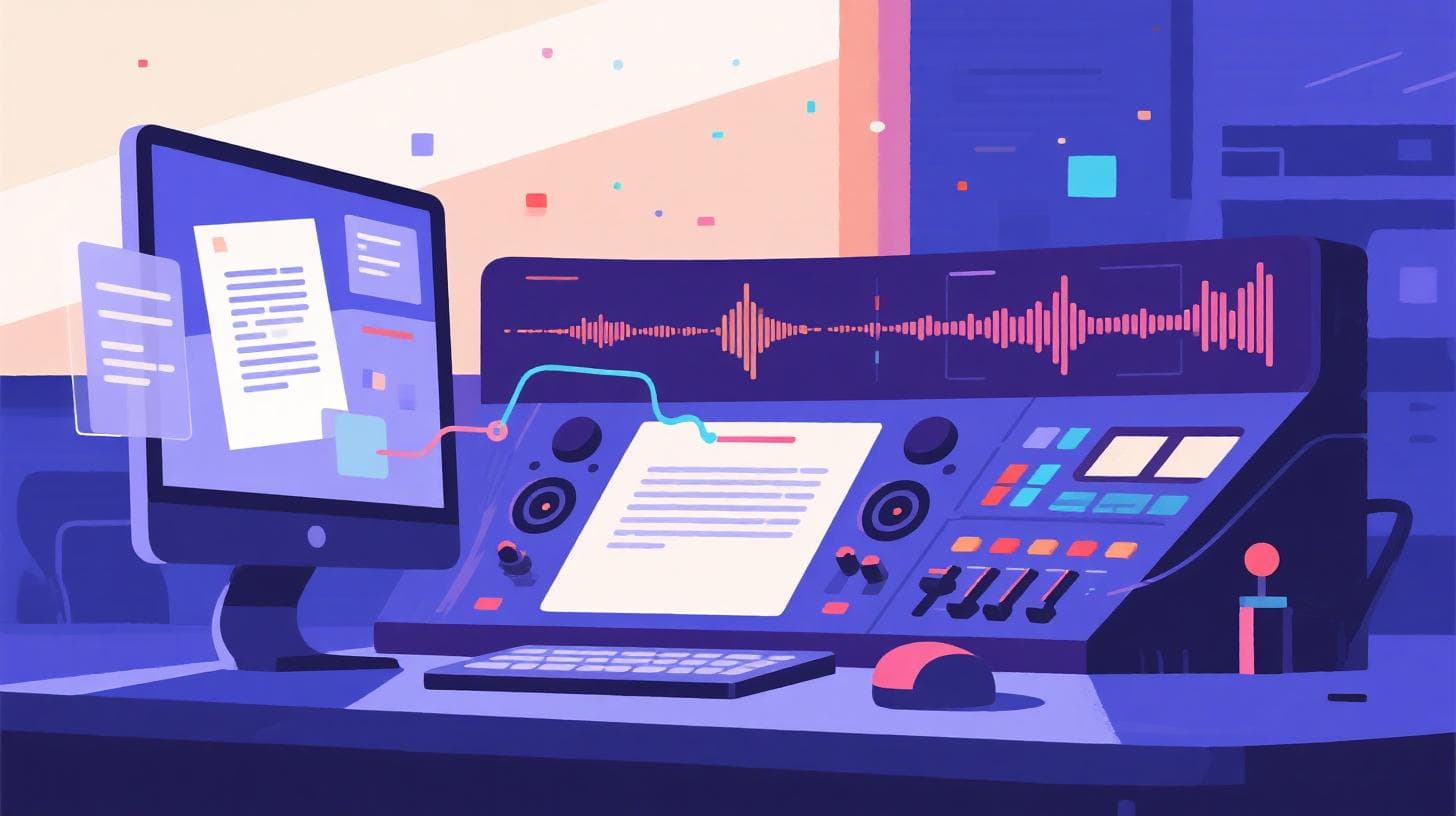
Imagine waking up to find a brand new podcast episode sitting in your feed, fully researched, scripted, narrated in multiple voices, and polished with music and transitions. You didn't record it. You didn't edit it. An automated AI pipeline handled every step while you slept.
That might sound futuristic, but it's already possible. Advances in AI research, natural language generation, and text-to-speech synthesis have collapsed the podcast production timeline from days (or weeks) down to minutes. The real trick isn't any single piece of technology. It's stitching those pieces together into a reliable, repeatable workflow that runs on autopilot.
This guide walks you through exactly how to build that workflow, from the moment a topic is selected to the moment a finished episode hits Spotify and Apple Podcasts. Whether you're a solo creator looking to publish more consistently, a marketer who wants a content channel without a recording studio, or just someone curious about what AI podcast automation actually looks like under the hood, you'll leave with a concrete blueprint you can start using today on a platform like VibeCasting.
Let's break the entire pipeline into its core stages.
Stage One: Automated Topic Research That Actually Goes Deep
The biggest misconception about AI-generated podcasts is that they're shallow. People picture a chatbot summarizing a Wikipedia article and calling it an episode. A well-built automated workflow does something fundamentally different: it conducts layered research across multiple sources, extracts key quotes, identifies conflicting perspectives, and organizes everything into a structured brief before a single word of script is written.
How AI Deep Research Works
Modern AI research pipelines use large language models to perform what's essentially an accelerated version of what a human producer would do. The system takes a topic prompt, like "the psychology behind wrongful convictions" or "how ocean microplastics enter the food chain," and runs a multi-pass investigation.
In the first pass, the AI identifies the core subtopics, key figures, landmark studies, and common misconceptions associated with the subject. In deeper passes, it drills into primary sources, pulls relevant statistics, and flags areas where expert opinions diverge. The result isn't a generic summary. It's a research document that mirrors what a skilled journalist would assemble before pitching a story.
Configurable research depth matters here. A quick research pass might be enough for a casual news recap, while a deep investigation is better suited for true crime narratives or documentary-style episodes where factual accuracy and nuance are non-negotiable. The National Institute of Standards and Technology has published extensive frameworks around trustworthy AI, and the principles they outline (accuracy, transparency, accountability) are directly relevant to how research-grade AI should be evaluated.
Turning Raw Research Into a Usable Brief
Raw data alone doesn't make a good episode. The next automated step is structuring that research into a brief that a script generator can actually work with. This means:
- Identifying a narrative arc. Every compelling episode has a beginning, middle, and end. The research brief should flag which findings create tension, surprise, or emotional resonance.
- Extracting quotable moments. Direct quotes from experts, officials, or study authors give episodes credibility and texture. AI can surface these automatically.
- Flagging source material. YouTube transcripts, academic papers, news articles, and even podcast clips from other shows can feed into the brief as reference material.
- Noting knowledge gaps. A good automated system doesn't just find information. It also identifies what's missing or contested, which becomes great fodder for on-air discussion.
The quality of your research stage determines the ceiling for everything that follows. A thin brief produces a thin script. A rich, multi-layered brief produces an episode that sounds like it was made by a team of producers.
Choosing Topics Automatically
Full automation means you're not even picking the topics manually. The best AI podcast workflows use scheduling systems that generate upcoming episode plans based on your series theme, audience interests, and content gaps. If you run a weekly true crime podcast, the system might queue up cases that are trending in public interest, recently had new developments, or fill a geographic region your show hasn't covered yet. Each planned topic then feeds directly into the research pipeline without you lifting a finger.
Stage Two: Script Generation With Style, Structure, and Multiple Voices
Research gives you the raw ingredients. Script generation is where those ingredients get cooked into something people actually want to listen to. This stage is where most amateur AI podcast attempts fall flat, because generating a script isn't the same as generating a good script.
Why Podcast Style Matters More Than You Think
Read the transcript of your favorite podcast. Notice how the language, pacing, and tone differ wildly depending on the genre. A true crime show uses deliberate pauses, cliffhanger transitions, and a gravelly narrator tone. A news and documentary podcast sounds authoritative, data-rich, and measured. A conversational show feels loose, uses humor, and lets hosts interrupt each other naturally.
An effective automated workflow doesn't produce one-size-fits-all scripts. It uses style-specific templates that shape everything from sentence length and vocabulary to the emotional cadence of each segment. Think of these styles as creative direction baked into the automation:
- Dramatic style leans into suspense, vivid scene-setting, and emotional peaks. Ideal for storytelling-heavy formats.
- Informative style prioritizes clarity, logical flow, and expert-level depth. Think of a well-produced documentary.
- Casual style mimics the rhythm of a real conversation between hosts who know each other well, complete with natural reactions and tangents.
If you're curious about the craft of writing scripts that sound natural when spoken by AI voices, this guide on writing podcast scripts optimized for AI voice generation goes much deeper into the nuances.
Emotional Arc Planning Before a Single Line Is Written
Before the script generator writes dialogue, the best workflows plan an emotional arc for the episode. This is a blueprint that maps the listener's emotional journey from start to finish.
For example, a true crime episode might follow this arc: curiosity (the hook) → unease (the crime details) → empathy (the victim's story) → frustration (investigation failures) → satisfaction or unresolved tension (the outcome). Each segment of the script is then written to serve that emotional beat, not just to convey information.
This step is subtle, but it's what separates AI-generated episodes that feel robotic from ones that hold attention for 20, 30, or 45 minutes. Listeners don't consciously think about emotional arcs, but they feel them.
Multi-Speaker Dialogue and Role Assignment
Real podcasts rarely feature a single voice droning through a monologue. Automated AI podcasts shouldn't either. A strong script assigns dialogue to multiple speaker roles: a primary host, a co-host, a narrator, an expert guest voice, or even a "devil's advocate" character who raises counterpoints.
Each speaker role has distinct personality traits, speech patterns, and functions within the episode. The host might ask guiding questions. The narrator delivers context. The expert voice provides authority. When the script is generated with these roles explicitly defined, the resulting audio feels dynamic and layered rather than flat.
The script stage also inserts production cues directly into the text: markers for where music beds should swell, where sound effects should punctuate a moment, and where transitions should carry the listener from one segment to the next. These cues become instructions for the audio generation stage.
Stage Three: Multi-Voice Audio Generation, Mixing, and Mastering
You have a polished, multi-speaker script with embedded production cues. Now it's time to turn text into sound. This is where AI podcast creation gets genuinely impressive, and where the gap between AI-generated audio and traditional recording has narrowed dramatically.
Text-to-Speech With Distinct, Natural Voices
Modern text-to-speech engines have moved far beyond the robotic tones most people associate with computer-generated speech. Neural TTS models produce voices with natural intonation, appropriate pauses, and emotional coloring that matches the content. When a script calls for a somber reflection, the voice sounds reflective. When it calls for excitement, the delivery picks up energy.
A fully automated workflow assigns each speaker role in the script to a specific voice from a speaker catalog. Some creators use system voices that come pre-trained and ready to go. Others upload audio samples and train custom voice clones that match a specific sound they want for their brand. Either way, each speaker in the episode sounds distinct, which is critical for listener engagement.
Before committing to full episode generation (which takes time and compute resources), smart workflows offer a 30-second audio preview. This lets you hear how the voices sound with the script, catch any awkward phrasing, and make adjustments before the full render.
The Audio Mixing Layer Most People Overlook
Voice generation alone doesn't produce a finished podcast. It produces a collection of voice clips. The mixing and mastering stage is what transforms those clips into a professional-sounding episode, and it's often the most underappreciated part of the pipeline.
Automated audio mixing handles:
- Music beds that play underneath speech, setting the mood for each segment without overpowering the dialogue.
- Sound effects triggered by the production cues embedded in the script. A door creaking, a crowd murmuring, a notification chime.
- Transitions between segments, from simple crossfades to styled sweeps that match your podcast's brand.
- Ambient sounds that create atmosphere. Rain for a moody segment, office noise for a business topic, nature sounds for a wellness show.
- Mastering that normalizes volume levels, compresses dynamic range, and applies EQ so the final file sounds consistent whether someone is listening on $300 headphones or a phone speaker.
Different audio styles (cinematic, professional, intimate, energetic) apply different mixing profiles to the same voice tracks. A cinematic style might use wider stereo imaging and more dramatic music. An intimate style might keep things dry and close, like a conversation in a quiet room.
Hosting and File Management
Once the audio is mixed and mastered, the file needs a home. Automated workflows push the finished MP3 or AAC file to cloud storage, generate show notes from the episode's script and research data, and update the podcast's RSS feed. That RSS feed is what distribution platforms like Spotify and Apple Podcasts pull from, so updating it triggers automatic availability across every major listening app. If you haven't set up distribution yet, this walkthrough on distributing your AI podcast covers the process step by step.
Putting It All Together: Scheduling, Publishing, and Scaling
The individual stages (research, scripting, audio) are powerful on their own. But the real magic of a fully automated workflow is that these stages chain together without manual intervention, running on a schedule you define.
Setting Your Publishing Cadence
Consistency is the single biggest predictor of podcast growth. Listeners subscribe to shows they can rely on. An automated workflow lets you commit to a publishing cadence that would be unsustainable with manual production.
Daily publishing works for news recap shows, market briefings, or meditation content where fresh episodes are expected every morning. Weekly is the sweet spot for most narrative and educational podcasts. Biweekly suits deep-dive formats where each episode requires extensive research. The automation handles topic selection, research, scripting, audio generation, and publishing for each cadence, delivering episodes on time every time.
VibeCasting's pricing page breaks down how different publishing schedules map to subscription tiers, so you can pick the cadence that fits your content strategy and budget.
The Episode Status Funnel
Understanding the automated pipeline means understanding the status funnel each episode moves through:
- Draft → The episode topic and plan exist, but nothing has been generated yet.
- Researching → The AI deep research agent is gathering and structuring source material.
- Researched → Research is complete. The brief is ready for script generation.
- Generating → The script is being written, with style, emotional arc, and speaker roles applied.
- Generated → The script is finished and ready for audio.
- Audio Generating → TTS, mixing, mastering, and file assembly are in progress.
- Published → The episode is live, the RSS feed is updated, and listeners can hit play.
A well-built system monitors this funnel and detects stuck jobs. If an episode sits in "audio generating" for too long, the system automatically resets it and retries. This kind of resilience is what separates a workflow you can trust from one you have to babysit.
Scaling Beyond a Single Show
Once your first automated podcast is running smoothly, the same infrastructure supports multiple series. A true crime show, a daily tech news brief, and a weekly wellness meditation can all run in parallel, each with its own style, voice catalog, and publishing schedule. You're not adding proportional effort for each new show. You're adding a new configuration to an existing pipeline.
This is also where newsletters enter the picture. The same research that feeds your podcast episodes can generate companion newsletters with HTML content, creating a multi-channel content engine from a single topic.
Building a fully automated AI podcast workflow isn't about replacing creativity. It's about removing the bottlenecks that prevent most creators from publishing consistently. The research still needs to be deep. The scripts still need emotional structure. The audio still needs professional polish. Automation simply ensures that every step happens reliably, on schedule, without you sitting at a microphone or hunched over an editing timeline.
If you're ready to stop planning episodes and start publishing them, VibeCasting lets you build exactly this kind of pipeline. Pick a topic, choose your style, set your schedule, and let the system handle the rest. Your first automated episode could be live before the end of the day.
- #Technical Deep Dives
- #General Audience