How to Turn Your Substack Newsletter Into a Podcast
Your Substack audience is just the beginning. Learn how to transform your newsletter content into a professional podcast using AI, reaching listeners who prefer audio without adding hours to your workflow.
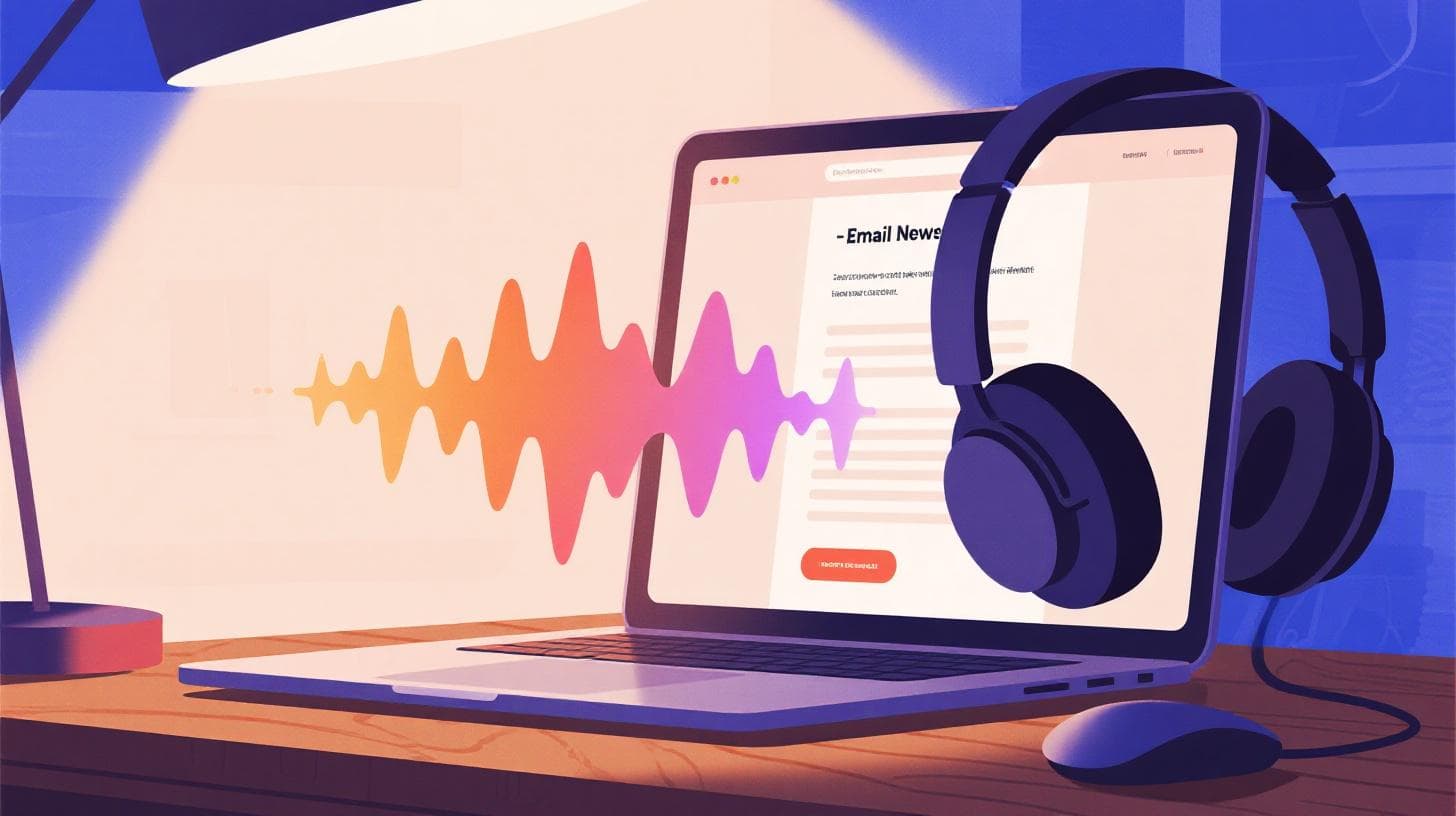
You've spent months (maybe years) building a loyal Substack audience. Your open rates are solid, your replies are thoughtful, and your writing covers topics people genuinely care about. But here's the thing: a huge chunk of your potential audience will never read a single word you write. Not because they don't care, but because they consume content with their ears, not their eyes.
According to Pew Research Center's audio and podcasting data, roughly half of Americans have listened to a podcast, and that number keeps climbing. Meanwhile, newsletter inboxes get more crowded every day. The writers who break through aren't just writing better. They're meeting audiences in new formats.
Turning your Substack into a podcast used to mean buying a microphone, learning audio editing software, finding intro music, and carving out hours every week to record. That barrier kept most writers stuck in text-only mode. But AI has changed the equation entirely. Tools like VibeCasting can transform your written content into fully produced, multi-voice podcast episodes with sound design, music beds, and automatic distribution. No recording booth required.
This guide walks you through the exact process of converting your newsletter content into a podcast that sounds professional, grows your audience, and takes a fraction of the time you'd expect.
Why Newsletter Writers Are Perfectly Positioned to Launch Podcasts
If you're already publishing a Substack, you have the hardest part of podcasting figured out: you know how to develop ideas, structure arguments, and show up consistently. Most podcasts fail because creators run out of things to say or can't maintain a schedule. Newsletter writers rarely have that problem.
Your existing content library is essentially a backlog of episode scripts waiting to be produced. Every essay, analysis, or deep dive you've published represents a potential podcast episode. And because you've already refined those ideas through the writing process, the quality bar is higher than someone winging it into a microphone.
But the real power of adding audio to your newsletter isn't just repurposing content. It's about reaching entirely different people. Think about when your readers engage with your newsletter: they're sitting at a desk, scrolling through email, probably between meetings or tasks. Now think about when podcast listeners engage: commuting, exercising, cooking dinner, walking the dog. These are fundamentally different moments in someone's day, and audio unlocks all of them.
There's also a trust factor that's hard to replicate in text. Hearing a voice (even an AI-generated one) creates a sense of intimacy and connection that written words struggle to match. Podcast listeners tend to feel like they know the hosts personally. That emotional bond translates into stronger audience loyalty, higher engagement, and more willingness to support your work financially.
The business case is straightforward too. A podcast gives you a second distribution channel through Apple Podcasts, Spotify, and other directories. People who discover your show through audio search or recommendations become new newsletter subscribers. People who read your newsletter but prefer audio become more engaged. Your content reaches further without requiring you to create entirely new material from scratch.
One concern newsletter writers often raise is whether audio will cannibalize their reading audience. In practice, the opposite happens. Podcast listeners who enjoy your perspective go looking for more, which means they subscribe to the newsletter. Newsletter readers who want a deeper experience start listening to episodes. The two formats feed each other instead of competing.
The final piece is consistency. Substack writers already operate on a publishing cadence, whether that's weekly, biweekly, or daily. That discipline maps directly onto podcast scheduling. You don't need to invent a new habit. You just need to extend the one you already have into audio format.
The Step-by-Step Process for Converting Written Content to Audio
Transforming a newsletter into a podcast episode isn't as simple as reading your article out loud and hitting publish. Great audio content has a different rhythm than written content. It needs conversational flow, vocal variety, and production elements that keep listeners engaged. Here's how to approach the conversion process.
Step 1: Select and Adapt Your Best Content
Not every newsletter issue makes an ideal podcast episode. Start by identifying your highest-performing posts, the ones with the best open rates, the most replies, or the most shares. These topics have already proven audience interest, which means they'll likely perform well as episodes too.
Once you've picked a piece, think about what needs to change for audio. Long, complex sentences that work on screen can feel exhausting when spoken aloud. Dense paragraphs packed with statistics need breathing room. References to "the chart below" obviously don't translate. You're not rewriting the content from scratch, but you are reshaping it for a listener's experience.
Consider how the tone should shift. Written newsletters can be information-dense and scannable because readers control the pace. Audio listeners can't skip ahead easily, so your content needs a stronger narrative thread pulling them through. Think about leading with a compelling hook, building tension or curiosity through the middle, and delivering a satisfying payoff.
Step 2: Choose Your Podcast Style and Format
The style of your podcast should match the personality of your newsletter. If you write casual, opinionated commentary, a conversational podcast style with a relaxed tone makes sense. If you produce deeply researched investigative pieces, a more dramatic or documentary-style format will feel natural.
Multi-voice formats are particularly effective for newsletter conversions. Instead of a single narrator reading your article, imagine a host presenting your key arguments while a second voice plays the role of a curious listener asking follow-up questions. This dialogue format breaks up monotony and makes complex ideas easier to follow.
You should also decide on episode length. Most newsletter issues translate well into 10 to 20 minute episodes, which is the sweet spot for regular podcast consumption. Longer investigative pieces might warrant 30 to 45 minutes. Match your format to how much substance the original content holds.
Step 3: Generate and Produce the Episode
This is where AI tools eliminate the traditional production bottleneck. Instead of recording, editing, mixing, and mastering audio yourself, platforms like VibeCasting handle the entire pipeline. You provide your content and preferences, and the system generates a fully produced episode with multiple voices, music beds, transitions, and sound effects.
The features available in modern AI podcast generators include deep research capabilities that can expand on your original newsletter content, script generation that restructures your writing for audio, multi-voice text-to-speech with natural-sounding speakers, and professional audio mixing with ambient sounds and mastering.
You can even generate a 30-second preview before committing to a full episode, which lets you test different styles and voice combinations without wasting time on something that doesn't feel right.
Step 4: Distribute and Cross-Promote
Once your episode is produced, you need it on every major podcast platform. RSS feed generation handles distribution to Apple Podcasts, Spotify, Google Podcasts, and dozens of other directories automatically.
The cross-promotion loop is simple but powerful. In your Substack, embed or link to the podcast episode at the top of each issue with a note like "Prefer to listen? Here's the audio version." In your podcast show notes, include a link to your Substack for listeners who want the full written version or supplementary materials. Every piece of content drives traffic to the other format.
Scaling Your Newsletter Podcast Without Burning Out
The biggest risk when adding a podcast to your newsletter workflow is overextending yourself. You're already creating content on a regular schedule. If podcasting doubles your workload, it won't last. The key is building a system that scales sustainably.
Start with a manageable cadence. If you publish your newsletter weekly, consider producing podcast episodes biweekly at first. This gives you time to refine your process without the pressure of matching your writing schedule immediately. Once the workflow feels smooth, you can increase frequency.
Batching is your friend. Instead of converting each newsletter one at a time, set aside a dedicated block to prepare multiple episodes. Review three or four recent newsletters, make quick notes on what needs adapting for audio, and queue them up for production. AI-powered tools with automated scheduling capabilities can then produce and publish episodes on a cadence you set, whether that's biweekly, weekly, or even daily.
Don't limit yourself to straight conversions of existing content. Your newsletter archive is a goldmine for creative remixing. Combine two related newsletters into a single themed episode. Pull the most compelling sections from several posts into a "best of" roundtable. Use your newsletter research as a starting point and let AI deep research expand it into a richer audio experience. One creator documented how this approach helped them reach 100K podcast downloads using AI tools alone, proving that quality and scale aren't mutually exclusive.
Show notes and episode descriptions matter more than most new podcasters realize. Good show notes improve discoverability in podcast search, give potential listeners a reason to press play, and create another opportunity to link back to your newsletter. Write them with the same care you give your Substack subject lines.
Track what works. Pay attention to which newsletter topics generate the most podcast downloads and which episode formats get the highest completion rates. This feedback loop will sharpen both your writing and your audio content over time. You might discover that your audience responds to certain themes differently in audio than in text, which gives you valuable insight into what content to create next.
One underappreciated benefit of this approach is creative freshness. Many newsletter writers hit a point where the writing process starts to feel repetitive. Adding a podcast gives you a new creative outlet for the same ideas. Hearing your concepts spoken aloud often sparks new angles and perspectives that make your written content better too. The two formats don't just reach different audiences. They make each other stronger.
Common Mistakes to Avoid When Launching Your Newsletter Podcast
The Substack-to-podcast pipeline is simpler than ever, but there are pitfalls that trip up even experienced creators. Avoiding these common mistakes will save you time and help your podcast gain traction faster.
The first mistake is treating audio as a second-class format. If you simply dump your newsletter text into a text-to-speech tool without any adaptation, the result will sound robotic and flat. Great podcast episodes need pacing, emphasis, and structure designed for listening. Even with AI handling production, the input content should be shaped for the ear. Add conversational asides, rhetorical questions, and natural transitions that guide the listener through your argument.
Another common error is launching without a clear value proposition for the audio format. Your podcast needs to offer something your newsletter doesn't, whether that's convenience (listen anywhere), deeper exploration (expanded research and commentary), or a different emotional experience (the intimacy of voice). If your podcast is just your newsletter read aloud with no additional value, listeners won't stick around.
Many newsletter writers also make the mistake of ignoring audio branding. Your written newsletter probably has a distinctive voice, consistent formatting, and recognizable style. Your podcast needs the same identity markers: a consistent intro, a signature tone, recognizable music, and a reliable format. These elements build familiarity and make your show feel professional from episode one.
Overcomplicating production is another trap. You don't need celebrity-quality voice acting, a full orchestra for your intro music, or Hollywood-level sound design. Clean, well-produced audio with thoughtful pacing beats overproduced content every time. Listeners care about ideas and delivery, not about how many sound effects you can cram into a transition.
Finally, don't neglect the discovery phase. Publishing a podcast and hoping listeners find it organically is a recipe for disappointment. Actively promote each episode through your newsletter, social channels, and any communities where your audience gathers. Ask listeners to rate and review your show, which improves visibility in podcast directories. Cross-promotion between your written and audio content should be baked into every issue and every episode from day one.
The newsletter writers who build the most successful podcasts aren't necessarily the best writers or the most knowledgeable experts. They're the ones who treat audio as a genuine extension of their brand, adapt their content thoughtfully for the format, and show up consistently.
Your Substack already proves you can do the hard part: creating ideas people care about. Adding a podcast is about packaging those ideas for the millions of people who prefer to listen. With AI tools handling the production heavy lifting, the gap between "newsletter writer" and "podcast creator" has never been smaller.
Ready to turn your next newsletter into a podcast episode? Get started with VibeCasting and see how your written content sounds when it comes to life.
- #Growth Strategies
- #Marketing Teams