How to Disclose AI in Your Podcast Without Losing Trust
Your listeners can handle the truth about AI. Learn exactly how to disclose AI-generated podcast content with practical templates and strategies that build trust instead of breaking it.
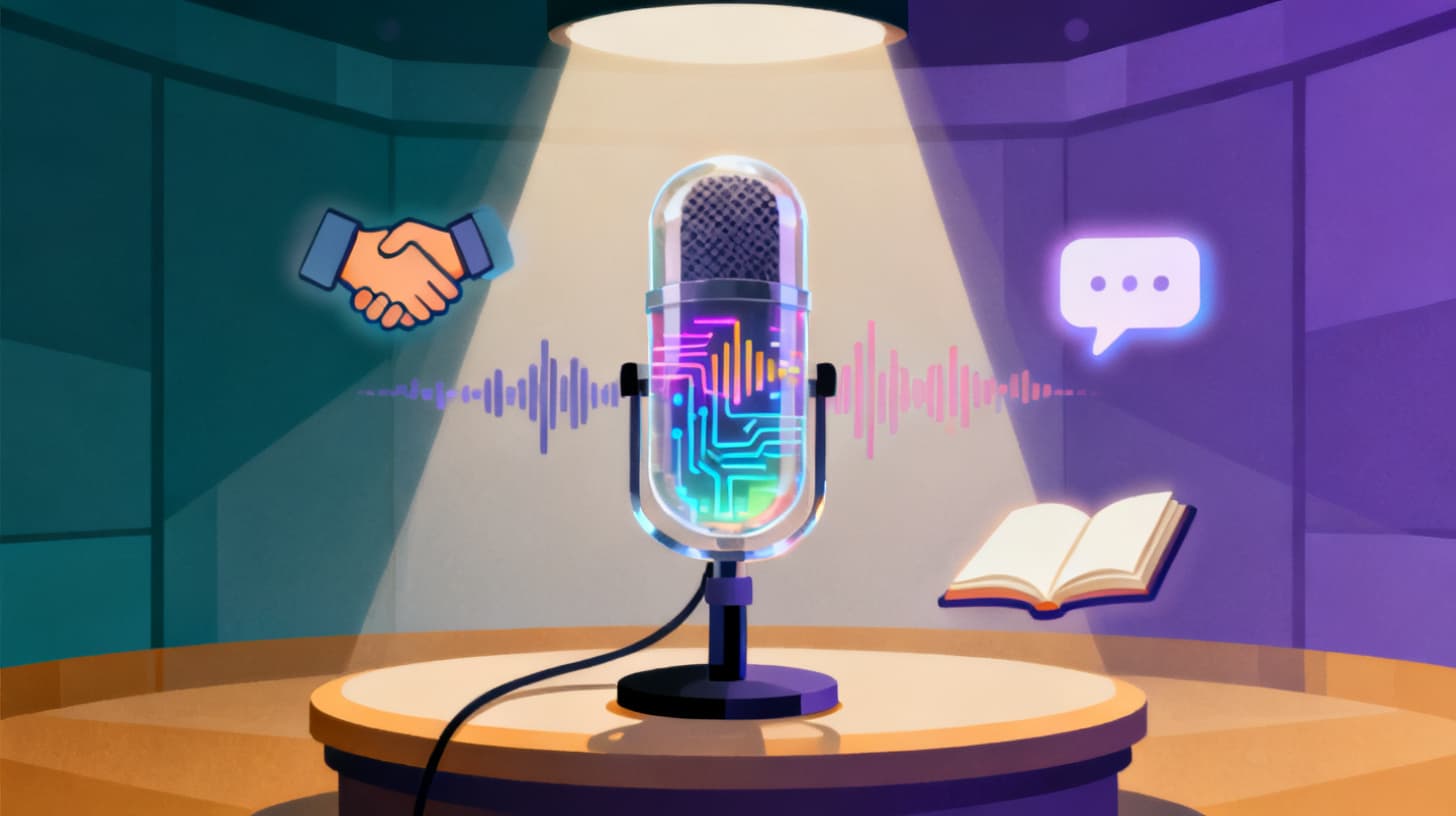
Your listeners can handle the truth about AI. What they can't handle is feeling deceived.
As AI-generated podcasts grow from a niche experiment into a legitimate content format, one question keeps surfacing: how do you tell your audience that some (or all) of your podcast is created with artificial intelligence without watching your download numbers crater? The fear is understandable. Podcasting has always been an intimate medium built on the human voice, personal storytelling, and authentic connection. Introducing AI into that equation feels risky.
But here's what the data actually shows: transparency doesn't destroy trust. Deception does. A study published by the Cornell University arXiv repository found that audiences who were informed about AI involvement before consuming content reported higher trust levels than those who discovered it later on their own. The takeaway? Getting ahead of the conversation is your superpower.
Whether you use VibeCasting to generate entire episodes with AI voices or simply lean on AI for research and scripting, this guide walks you through exactly how to disclose that process honestly, strategically, and in a way that actually strengthens your relationship with listeners.
Why Disclosure Matters More Than You Think
Let's start with the uncomfortable question: do you really need to disclose AI use in your podcast? After all, nobody demands that bloggers reveal they used Grammarly, or that filmmakers credit their editing software.
The difference comes down to voice. Podcasting is one of the few mediums where the audience forms a parasocial relationship with the creator through their literal voice. When listeners discover that the voice they've been trusting, laughing with, and learning from was generated by a machine, the betrayal feels personal. It's not about the technology. It's about the expectation.
And that expectation gap is where trust collapses.
The Real Cost of Getting Caught
Consider what happens when disclosure comes involuntarily. A listener notices something off about the cadence. They run the audio through a detection tool. They post about it on social media. Now you're not just an AI podcast creator. You're a fraud. The narrative has been written for you, and you don't get to control it.
Contrast that with creators who lead with transparency. They frame AI as a creative tool, explain why they use it, and invite listeners into the process. These creators often find that their audiences become more engaged, not less, because the honesty signals respect.
There's also a practical consideration: regulation is catching up. Several jurisdictions are introducing requirements around AI-generated media disclosure, particularly when synthetic voices are involved. The European Union's AI Act, for example, includes provisions requiring that AI-generated content be clearly labeled. Platforms like Apple Podcasts and Spotify are also developing their own policies. Getting comfortable with disclosure now means you won't be scrambling to comply later.
What Listeners Actually Care About
Here's something that surprises most podcast creators: listeners don't object to AI as strongly as you might expect. What they object to is the feeling of being manipulated. Research consistently shows that audiences evaluate content primarily on value, not on production method. If your podcast delivers genuine insight, entertainment, or information, the production pipeline matters far less than you'd think.
What listeners do want to know is:
- Is the information accurate? AI involvement raises questions about fact-checking and editorial oversight.
- Whose perspective am I hearing? If a human didn't write the script, who shaped the editorial direction?
- Am I being sold something I don't know about? Hidden AI feels like hidden sponsorship: a transparency violation.
When you address these concerns proactively, you remove the anxiety and let people focus on what matters: your content.
Building a Disclosure Strategy That Feels Natural
The biggest mistake creators make with AI disclosure is treating it like a legal disclaimer. You know the type: a monotone block of text buried in the show notes that nobody reads, positioned to technically satisfy requirements while hoping nobody notices.
That approach backfires because it signals shame. If you're hiding your disclosure, you're implicitly telling your audience that AI is something to be embarrassed about. And if you seem embarrassed, why should they feel good about it?
Instead, effective disclosure is confident, brief, and woven into your podcast's identity. Here's how to build that strategy.
Start With Your "Why"
Before you write a single disclosure statement, get clear on why you use AI. This isn't just a philosophical exercise. Your "why" becomes the foundation of every disclosure you make.
Are you a subject matter expert who wants to share knowledge but doesn't have the voice, equipment, or time to record traditionally? Say that. Are you building a daily news briefing that would be impossible to produce manually? Explain that. Are you experimenting with new storytelling formats that blend human creativity with AI capabilities? Own it.
Your reasons are valid. When you articulate them clearly, your audience gets it. Most people are remarkably reasonable when you treat them like adults.
For instance, if you use VibeCasting's voice cloning and audio generation features to produce episodes from AI-generated scripts, you could frame it like this: "I use AI tools to research, script, and voice this podcast so I can focus on choosing topics that actually matter to you. Every fact is verified and every editorial decision is mine."
That's honest. It's confident. And it positions you as the creative director, not a fraud.
Choose Your Disclosure Touchpoints
Effective disclosure isn't a one-time event. It's a system of touchpoints that reach listeners wherever they encounter your show. Here's where to place them:
- Podcast description (RSS feed). Add a brief, permanent note to your show's main description. Something like: "This podcast is produced using AI voice and audio technology. All content is human-directed and fact-checked." This is your baseline. It lives everywhere your podcast is distributed.
- Episode intro or outro. A short spoken disclosure at the beginning or end of each episode normalizes the information. Keep it to one or two sentences. Don't apologize, don't over-explain. Treat it with the same casual confidence as a sponsorship read.
- Show notes. Each episode's description should include a line about AI involvement. This is also where you can link to a more detailed explanation if listeners are curious.
- Your website or landing page. If you have a dedicated page for your podcast, include a "How This Show Is Made" section. This is your chance to go deeper on your creative process and the tools you use.
- Social media (when relevant). When sharing clips or promoting episodes, you don't need to flag AI in every post. But when someone asks, answer openly and without defensiveness.
The key across all these touchpoints is consistency. If a listener encounters your show on Spotify, then visits your website, then sees you on social media, the message should be the same. Inconsistency breeds suspicion.
The Language That Works (and the Language That Doesn't)
Word choice matters enormously. Here are some practical swaps:
❌ Avoid This | ✅ Try This Instead |
"This content was generated by AI" | "This episode was created with AI production tools" |
"No humans were involved" | "Human-directed, AI-produced" |
"AI-created podcast" | "AI-powered podcast" |
"Synthetic voice" | "AI voice technology" |
"Disclaimer: AI was used..." | "About this show: We use AI to..." |
Notice the pattern? The effective language emphasizes the creative process and human oversight rather than the absence of humans. It frames AI as a tool in service of a human vision, not a replacement for one.
Turning Transparency Into a Competitive Advantage
Here's where things get interesting. Disclosure isn't just damage control. For smart creators, it's a genuine differentiator.
Think about it: the podcast space is crowded. Thousands of shows launch every week, and most of them blur together. But a show that openly discusses its AI production process? That's memorable. That's a talking point. That's something listeners mention when recommending your show to friends.
"You should check out this podcast. It's actually made with AI, but it's really good." That sentence, repeated across enough conversations, is worth more than any marketing campaign.
Invite Listeners Behind the Curtain
One of the most powerful trust-building techniques is process transparency. Don't just tell listeners you use AI. Show them how.
Consider creating a dedicated "behind the scenes" episode where you walk through your production workflow. Explain how you choose topics, how the research process works, how scripts are generated and refined, and how the final audio comes together. If you use features like 30-second audio previews to quality-check episodes before publishing, mention that. It demonstrates care and quality control.
You could also share occasional "outtakes" or comparisons showing what raw AI output looks like versus the final edited product. This demystifies the technology and helps listeners understand that AI-generated doesn't mean "no effort involved."
For creators who are just starting out, learning how to start a podcast without recording a single word is a great primer on what the AI production process actually looks like. Sharing resources like this with your audience shows confidence in your approach.
Build a Feedback Loop
Transparency is a two-way street. After you disclose your AI use, actively invite listener feedback. Ask questions like:
- "Does knowing this show uses AI change how you experience it?"
- "What would you like to know about our production process?"
- "Are there topics you'd like us to cover about AI in podcasting?"
This accomplishes two things. First, it gives you real data about how your audience feels (instead of operating on assumptions). Second, it signals that you value their perspective, which deepens trust regardless of what technology you're using.
Many creators discover that their audiences are far more curious than hostile. People want to understand how AI podcasting works. They have questions about the voices, the scripts, the research process. When you answer those questions generously, you become not just a podcast, but a trusted guide in a rapidly shifting media landscape.
Address Concerns Before They Become Objections
Proactive creators anticipate the most common listener concerns and address them directly. Here's a practical framework:
- "Is the information reliable?" Explain your fact-checking process. If you review and edit every script before it goes to production, say so.
- "Are real people losing jobs because of this?" Acknowledge the concern honestly. Explain that AI tools allow more people to create podcasts who previously couldn't, expanding the creator ecosystem rather than shrinking it.
- "Will you always be transparent about this?" Commit publicly to ongoing disclosure. Make it part of your brand promise.
For common questions about how AI podcasting platforms handle these issues, the VibeCasting FAQ is a useful resource that addresses many of these concerns directly.
A Practical Disclosure Template You Can Use Today
Let's pull everything together into something you can implement immediately. Below is a disclosure system you can adapt for your own podcast, regardless of how much AI you use in your production process.
For Your Podcast Description
"[Podcast Name] is produced using AI voice and audio technology, with all topics, editorial direction, and fact-checking managed by [your name/team name]. We believe in transparent, high-quality content creation, and we're always happy to answer questions about our process."
For Your Episode Intro
Keep it short. One to two sentences, delivered with the same tone as the rest of your show:
"Quick note for new listeners: this show is produced using AI audio tools. I handle the creative direction and make sure everything you hear is accurate. Now, let's get into it."
For Your Show Notes
"Production note: This episode was created using AI voice generation and audio production tools. All content is human-directed and fact-checked. Questions about our process? Email us at [your email]."
For Your Website
Create a simple "How We Make This Show" page with three to four paragraphs explaining your workflow, why you chose AI tools, and how you ensure quality. Include your contact information for anyone who wants to learn more.
- Add disclosure to podcast RSS description
- Record a brief intro/outro disclosure clip
- Update show notes template to include production note
- Create a "How This Show Is Made" page on your website
- Draft responses to the three most common listener concerns
- Schedule a "behind the scenes" episode for your first month
That checklist might look like a lot, but each item takes 15 minutes or less. The compound effect of implementing all of them is a disclosure system that feels effortless to your audience and protects your reputation long-term.
The creators who will thrive in AI podcasting aren't the ones who hide from the technology. They're the ones who own it with clarity, confidence, and respect for the people listening. Your audience chose your podcast because of the value you provide. Give them the full picture of how that value gets created, and most of them will stick around. Many will respect you even more for it.
Ready to build an AI-powered podcast with a production workflow you can be proud of? VibeCasting gives you the tools to create professional, multi-voice episodes while keeping you in the creative driver's seat. Start building your show today.
- #Industry Trends
- #General Audience