How to Choose Your Podcast Niche and Build a Listener Persona
Picking the wrong podcast niche is the fastest way to burn out. Learn how to find your perfect niche, build a listener persona, and launch an AI podcast that attracts loyal subscribers.
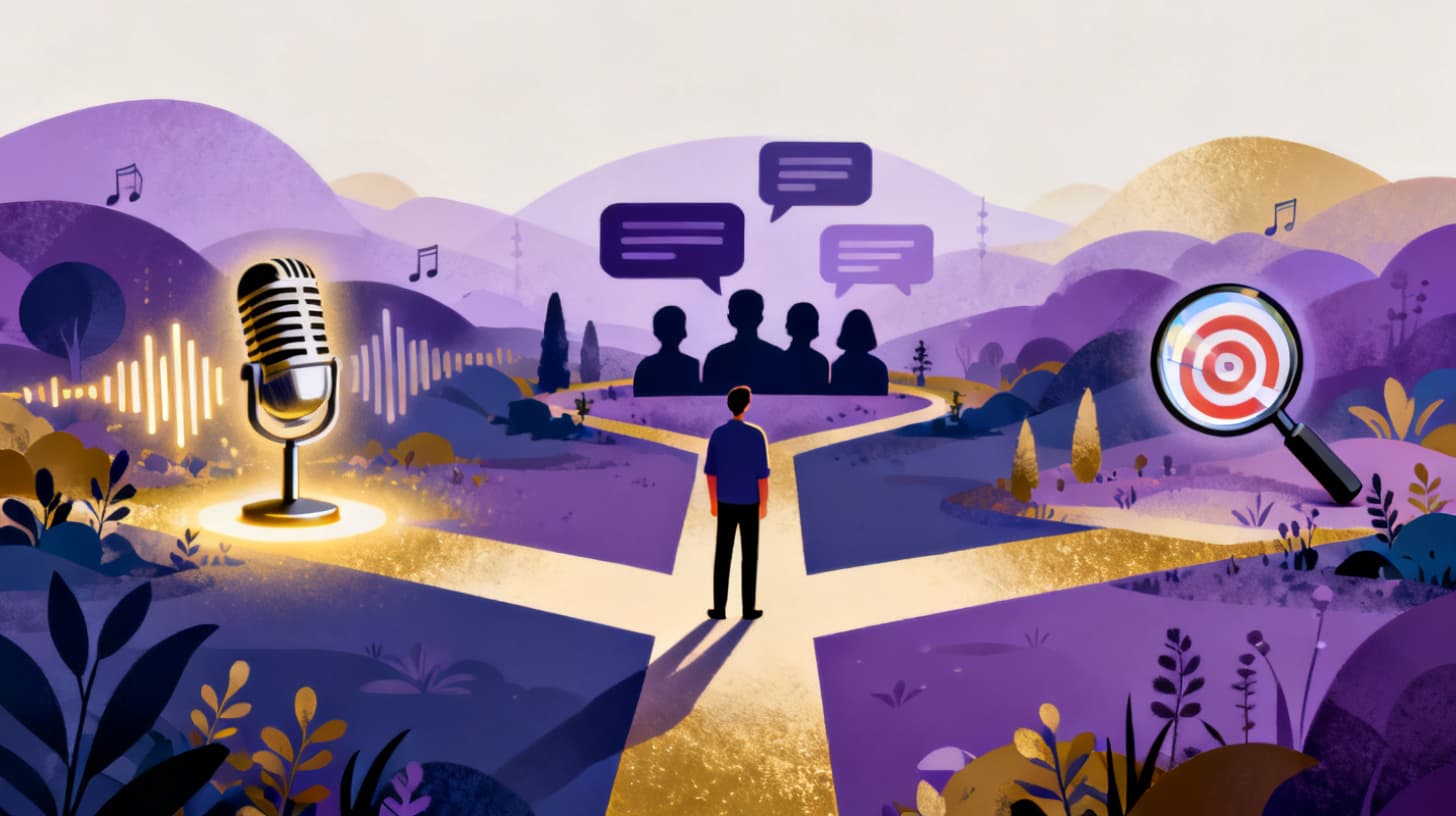
You have a podcast idea bouncing around in your head. Maybe several. The problem isn't a lack of inspiration. It's knowing which idea will actually attract listeners who come back episode after episode. Picking the wrong niche is the single fastest way to burn out on a show that nobody listens to, and skipping the work of understanding your ideal listener means you're essentially shouting into the void.
The good news? Choosing a niche and building a listener persona isn't guesswork. It's a repeatable process, and it works whether you're recording every episode yourself or using an AI podcast generator like VibeCasting to automate production. Let's walk through the entire process so you can launch with clarity and confidence.
Finding the Niche That Balances Passion, Demand, and Competition
Every podcasting guide tells you to "pick a niche," but most skip the part where they explain how. A good niche sits at the intersection of three things: something you genuinely care about, something an audience is already searching for, and something that isn't so crowded you'll never get discovered. Let's break down how to evaluate all three.
Start With What You Can Sustain
Forget about trending topics for a moment. Think about the subjects you naturally gravitate toward. What do you read about, talk about at dinner, or lose track of time researching? Podcasting rewards consistency above almost everything else, so the topic needs to hold your attention for dozens of episodes, not just a handful.
Make a quick list of 5 to 10 subjects you could talk about repeatedly without getting bored. Don't filter yet. Include everything from true crime cold cases to personal finance for freelancers to the science behind sleep. The goal is volume at this stage.
Validate Demand Without Overthinking It
Once you have your list, run each topic through a few simple checks. Search for it on Apple Podcasts and Spotify. Are there existing shows? That's a good sign, not a bad one. It means people are looking for this content. Zero results usually signals zero demand, not untapped opportunity.
Next, check Google Trends. Type in your topic and look at search interest over time. You want something with steady or growing interest, not a spike that already faded. Forums like Reddit are another goldmine. Find subreddits related to your topic and look at what people are asking, complaining about, and debating. Those conversations are future episode ideas.
Edison Research found that over 100 million Americans listen to podcasts monthly, but the distribution of those listeners is wildly uneven across categories. Broad categories like "true crime" and "comedy" are massive, while micro-niches like "urban foraging" or "AI ethics for small business" have smaller but deeply engaged audiences. The sweet spot for new podcasters is almost always the micro-niche.
Narrow Until It Feels Uncomfortable
Here's the counterintuitive part: the more specific your niche, the easier it is to grow. "Business" is not a niche. "Marketing" is barely a niche. "Email marketing for Shopify store owners" is a niche. "Cold case murders in the Pacific Northwest" is a niche. Specificity gives you a built-in audience filter. The right people self-select, and they become loyal listeners fast.
Try this exercise: take your favorite topic from your list and add a modifier. Who is it for? What angle makes it unique? What format makes it different?
- Too broad: Health and wellness
- Getting closer: Nutrition for busy professionals
- Niche: Meal prep strategies for remote workers who hate cooking
That last one sounds narrow, but it's the kind of show someone hears about and immediately subscribes to because it feels like it was made specifically for them.
Once you've narrowed your niche, consider which podcast style serves it best. A true crime show benefits from a dramatic, cinematic approach. A news analysis show works better as an informative deep-dive. A lifestyle show thrives with a casual, conversational tone. Platforms like VibeCasting offer distinct podcast styles and features that map directly to these formats, so matching your niche to the right style is easier than you might think.
Building a Listener Persona That Actually Guides Your Decisions
A listener persona isn't a marketing exercise you do once and file away. It's a practical tool that shapes every creative decision you make, from episode topics to episode length to the vocabulary you use. Think of it as a detailed profile of the one person you're making this show for.
Why "Everyone" Is the Wrong Audience
When someone says their podcast is "for everyone interested in technology," they've already lost. Generic targeting leads to generic content, and generic content gets ignored. The most successful independent podcasts have an almost uncomfortably specific picture of their listener. They know their listener's job title, daily frustrations, media diet, and what they're doing while they listen.
This specificity doesn't exclude people. It attracts them. When a 28-year-old product manager hears a podcast intro that says "for product managers drowning in stakeholder requests," she's hooked, even though the content might also be valuable to project managers, designers, and founders. Specificity is a magnet, not a fence.
The Five Dimensions of a Strong Listener Persona
Build your persona across these five dimensions, and you'll have enough detail to make real creative decisions.
Demographics: Age range, profession, income bracket, education level, location. These aren't just vanity stats. They determine your vocabulary, your references, and your advertising appeal. A show for mid-career software engineers sounds different from a show for college students exploring tech careers.
Psychographics: Values, beliefs, fears, aspirations. What keeps your listener up at night? What does success look like to them? A listener persona for a personal finance podcast might include "believes financial independence is possible but feels overwhelmed by conflicting advice" or "distrusts traditional financial advisors but doesn't have time to do deep research alone."
Listening context: Where and when does your listener consume podcasts? During a commute? While cooking dinner? At the gym? This directly impacts ideal episode length. Commuters prefer 20 to 40 minutes. Gym-goers want high energy content. Late-night listeners might want longer, more immersive episodes.
Content preferences: Does your listener want actionable tactics they can implement today, or do they want deep storytelling that entertains? Do they prefer solo commentary, interviews, or multi-voice narratives? Understanding this prevents the common mistake of building a show you want to make instead of the show they want to hear.
Media diet: What other podcasts does your listener subscribe to? What YouTube channels, newsletters, or social accounts do they follow? This tells you who your true competitors are and what gaps exist. If every competing show is interview-based, maybe your listener is craving a tightly scripted narrative format instead.
Putting the Persona on Paper
Give your persona a name and write it as a paragraph, not a bulleted list. Something like:
"Marcus is a 34-year-old operations manager at a mid-size logistics company. He commutes 45 minutes each way and listens to podcasts exclusively during his drive. He's interested in leadership and management but finds most business podcasts too theoretical. He wants specific frameworks he can test with his team the same week. He already listens to two management podcasts but feels like they repeat the same generic advice. He's looking for something that respects his time and gives him one concrete takeaway per episode."
That paragraph tells you everything. Episode length should be around 30 minutes. Content should be tactical, not theoretical. Each episode needs a clear, single takeaway. The tone should be direct and respectful, not overly casual or preachy.
Matching Your Niche and Persona to an AI Podcast Workflow
Here's where your niche and persona research pays off in a very practical way. If you're using AI tools to generate podcast content, the quality of your output depends entirely on the quality of your input. A vague prompt produces vague content. A niche-specific, persona-informed prompt produces content that sounds like it was crafted by someone who deeply understands the audience.
Translating Your Persona Into Production Decisions
Your listener persona should directly influence the following production choices:
Research depth. If your persona is a busy professional who wants quick takeaways, your research should be focused and efficient, pulling the most relevant data points rather than exhaustive academic deep-dives. If your persona is a hobbyist who loves going down rabbit holes, deeper research with more tangential connections will keep them engaged.
Script style. Marcus from our example above wants direct, tactical content. That means your scripts should minimize lengthy introductions, skip the small talk, and get to the point. A persona who listens for entertainment and escapism, like a true crime fan looking for immersive storytelling, needs scripts with emotional arcs, cliffhangers, and atmospheric descriptions.
Voice and tone. A casual, conversational multi-voice format works beautifully for lifestyle and culture topics. A single authoritative voice fits news analysis. A dramatic narrator with sound design suits investigative or true crime content. Your persona tells you which approach will resonate.
Publishing cadence. How often does your listener want new episodes? Daily news briefings serve a different persona than weekly deep-dives. Getting the cadence wrong is a common reason listeners drop off. A persona who wants daily updates will drift away from a monthly show. A persona who savors long-form content will feel overwhelmed by daily drops. When you're ready to commit to a cadence, you can explore VibeCasting's plans to match your publishing schedule to the right subscription level.
The beauty of working with AI podcast tools is that once you've done the upfront work of defining your niche and persona, you can encode those decisions into your podcast series settings and let automation handle the repetitive production work. Your creative energy stays focused on topic selection and quality control rather than recording, editing, and mixing.
Testing Your Niche Before You Commit
Don't launch a 50-episode series on day one. Create three to five test episodes across slightly different angles within your niche. Share them with people who match your listener persona and ask specific questions: Did this hold your attention? What would you want to hear more about? What felt unnecessary?
This feedback loop is invaluable. It might reveal that your assumed persona was slightly off, or that a sub-topic within your niche generates far more excitement than your main angle. Adjust early, before you've invested months into a direction that isn't clicking.
If you want those test episodes to reach listeners beyond your immediate circle, getting your show on major platforms is essential. Setting up your podcast RSS feed and getting listed everywhere ensures your test episodes are discoverable where your target listener already browses for new shows.
Evolving Your Niche and Persona as Your Show Grows
Your niche and persona aren't set in stone. They're living documents that should evolve as you collect real data from real listeners. The smartest podcasters treat their initial niche and persona as a hypothesis, then refine based on evidence.
Pay attention to which episodes get the most downloads, the longest listen-through rates, and the most social shares. These signals tell you what your audience actually wants, which sometimes differs from what you assumed they'd want. An episode you thought was a throwaway might outperform your "best" content because it hit a nerve you didn't anticipate.
Reviews and listener messages are another feedback goldmine. When someone takes the time to write a review, they're telling you exactly who they are and what they value. Collect these descriptions and compare them to your original persona. You'll often find that your real audience is slightly different from your imagined one, and those differences should inform your content strategy going forward.
As your audience grows, you might also discover adjacent niches that your listeners care about. This is where thoughtful expansion happens. If your show about email marketing for Shopify owners starts getting requests for content about SMS marketing or retention strategies, that's your audience telling you where to grow next. Expand gradually, always checking that new topics still serve your core listener.
One of the biggest risks as a show matures is content fatigue, both for you and your listeners. Having a clear niche and persona helps you avoid the trap of running out of ideas, because you can always return to your persona's core problems and find fresh angles. Building a content flywheel that prevents podfade is especially important for AI-generated shows where consistency is a key advantage.
Finally, revisit your persona every 20 to 30 episodes. Write a fresh version based on what you've learned. Compare it to the original. The evolution itself will tell a story about how your understanding of your audience has deepened, and that deeper understanding is what separates shows that plateau from shows that keep growing.
Your niche is your foundation. Your listener persona is your compass. Get both right, and every other decision, from topics to tone to publishing schedule, becomes dramatically easier. The work you put in before recording a single episode is the work that determines whether anyone presses play.
Ready to put your niche and persona into action? Start building your AI-generated podcast with VibeCasting and turn your research into a show that resonates with exactly the right audience.
- #Growth Strategies
- #General Audience